
Afrikaans — the modern version of the language is much more than merely a Dutch derivative as some would suggest. Inextricably linked for the last century with the development and application of apartheid within South Africa, the immense reach and value of this language has often been overlooked within the wider political climate.
While the Dutch, who arrived in South Africa in 1652 and established a colony in Cape Town, are largely credited with the birth of the language, the version spoken today is an accumulation of many other influences. The Dutch dialect established after 1652 incorporated terms and phrases handed down from sailors who had been shipwrecked off the Cape coast after it became clear that the horn of Africa presented another viable trade route. The arrival of the French Huguenots in 1688 almost doubled the European population of the Cape, and also naturally had an immense impact on the spoken language of the day. These phrases, of English, French and Portuguese origin, soon found their way into the Dutch dialect.
In addition, the language took on a more oriental flavour with the arrival of slaves in the Cape, primarily of Malay extraction, but also from other eastern regions and nearby African islands including Madagascar. This spiced the language considerably, and when the accents, dialects and phrases of the original inhabitants of the land were added to the mix, it became evident that Afrikaans was a completely different language to its Dutch parent.
The Hottentots, the original Khoi inhabitants, as well as the Xhosa and the Zulu people all contributed in their fashion to the language as it is spoken today.
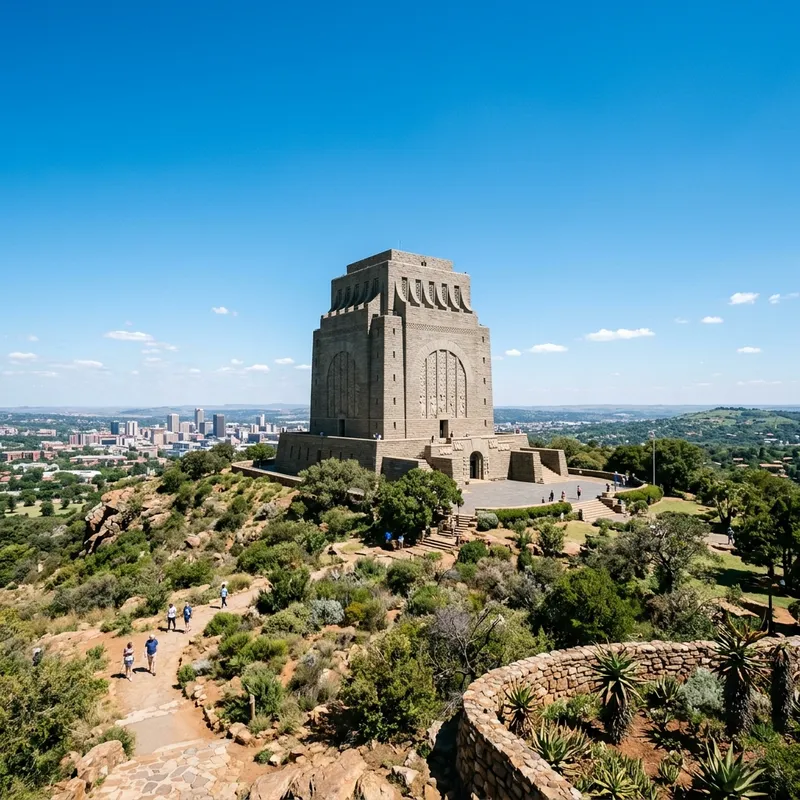
The struggle to gain recognition for Afrikaans as a written language was directed and carried out from the town of Paarl. The Guild of True Afrikaners (Genootskap van Regte Afrikaners) had its inaugural meeting here in 1875 with the aim to establish the new language of Afrikaans in a written form. The Afrikaans Language Monument was erected in 1975 in Paarl to honour the Afrikaans language.
From this development, three main dialects emerged:
As the language evolved, the white Afrikaans speakers distanced themselves from the predominantly English-speaking community. Believing themselves to be the true white owners of the land and rejecting any claims of the indigenous people, the Afrikaners pitted themselves against the English, culminating in the Anglo-Boer War of 1899–1902.
The Afrikaners lost this war but embarked upon a ‘Kultuur’ campaign (Culture campaign) to promote the language. When the Afrikaans-oriented National Party won the South African elections of 1948, the party introduced measures designed to leapfrog Afrikaans speakers over others in the country in the employment and business sector.
The National Party’s institution of Apartheid and decision to teach black children in Afrikaans only was an unpopular one and was the main reason for the Soweto uprising of 1976. Unfortunately, the National Party’s ruthless Apartheid regime and simultaneous promotion of the language forged a link between the language and the political system that remains to this day.
Despite attempts to keep the language as one of only two official languages after 1994, the Constitutional Assembly in the newly democratised South African republic chose to downgrade Afrikaans to only one of eleven official languages, its protected status a thing of the past.
While you are visiting South Africa, you will meet many people who seem to speak something like English – but not quite! Here are some words to help you understand our unique language.
South African vernacular – mainly of Dutch origin, but has elements of French, German, Malaysian, and several African languages.
Person mostly of Dutch descent, who can trace their heritage in this country back several generations, and speaks Afrikaans as a home language.
A small pick-up truck or utility vehicle.
Mountain. In place names it refers to a mountain range – Drakensberg – “Dragon Mountains”.
Strips of salted, sun-dried meat. A popular South African delicacy, perfect when watching rugby.
Literally “lightning”. Slang meaning “to hit” someone or to call them a scoundrel.
Literally “farmer”, also refers to someone of European descent tracing their family back many generations.
A recognized breed of large, muscular South African dog.
“Farmer’s sausage” – spiced sausage essential for any traditional braai. Often called “Boeries”.
A social barbecue. A deeply South African event involving grilled meats, pap, and sauce.
Term used for open, woody plains and areas of Acacia Savannah. Typical safari landscape.
Goodbye or a celebratory toast when sharing drinks.
Local name for marijuana, sometimes used in traditional rituals.
Slang meaning “stupid”, slow, or not fully awake.
An expressive exclamation of surprise, shock, or regret.
An expert, master, or teacher on a specific subject.
Literally “throw”. Used like “give/pour” – e.g. “Gooi me a dop” (Pour me a drink).
Greeting meaning “How goes it?”. Common reply: “Lekker, and you?”
A traditional herbal healer, distinct from a Sangoma (who operates spiritually).
A battered, broken-down old car.
Yes. Often heard in “Ja-nee” – meaning “Yes-no” (indicating agreement or irony).
A party, fun gathering, or good time. “Let's have a jol” = Let's have fun.
Means “soon” or in a little while – but not immediately.
Slang for “trouble” or “nonsense”. “I’m in kak” = I’m in trouble.
Small hill or mound – literally “little head” in the landscape.
Commonly used to mean “good”, “great”, or “nice”. “Lekker and you?”
Homemade fruit alcohol, very strong. The high-proof version is “witblits”.
Medicine or traditional remedy – from the Zulu word “uMuthi”.
Stiff maize meal porridge – eaten with “sous” at a braai or breakfast.
Circular thatched house, common in traditional areas and safari lodges.
Traditional spiritual healer, diviner, or medium.
Expression meaning “Cool, all good, agreed, or goodbye.”
Hungry or thin. Usually resolved by a hearty braai.
To like. “I’d smaak to gooi a braai” = I’d like to have a barbecue.
Sauce – often tomato and onion mix served with pap.
Slang for an attractive young lady. Literally translates to “piece”.
Journey or move. “It’s a long trek” = It’s a long trip.
Open countryside, grassland, or natural savanna terrain.
Traditional raw leather shoes – a classic symbol of South African farming life.
Deep-fried dough pastry, typically filled with savory mince or sweet jam.
Slang expression meaning “get lost” or “go away”. Often said to animals.
European pioneers who moved inland from the Cape during the 1830s.
Very strong, home-distilled alcohol. Literally translates to “white lightning”.
A popular local nickname for a strong, well-known brand of local beer.
Afrikaans has borrowed and adapted terms from a variety of distinct languages, representing its complex maritime and colonial origins:
| Afrikaans Word | From | Meaning | Afrikaans Word | From | Meaning |
|---|---|---|---|---|---|
| assegaai | Khoisan | spear | chana / china | Zulu – “umtshana” (nephew) | friend |
| karos | Khoisan | blanket of hides | fundi | Zulu – “umfundisa” (teacher) | expert on subject |
| kombuis | Seafaring Dutch | galley = kitchen | gogga | Khoisan – “xo-xon” | insect |
| piesang | Malay | banana | kraal | Portuguese – “curral” | cattle enclosure |